Tips on how to Setup All in One web optimization for WordPress Correctly (Ultimate Guide)
Warning: Undefined variable $post_id in /home/webpages/lima-city/booktips/wordpress_de-2022-03-17-33f52d/wp-content/themes/fast-press/single.php on line 26
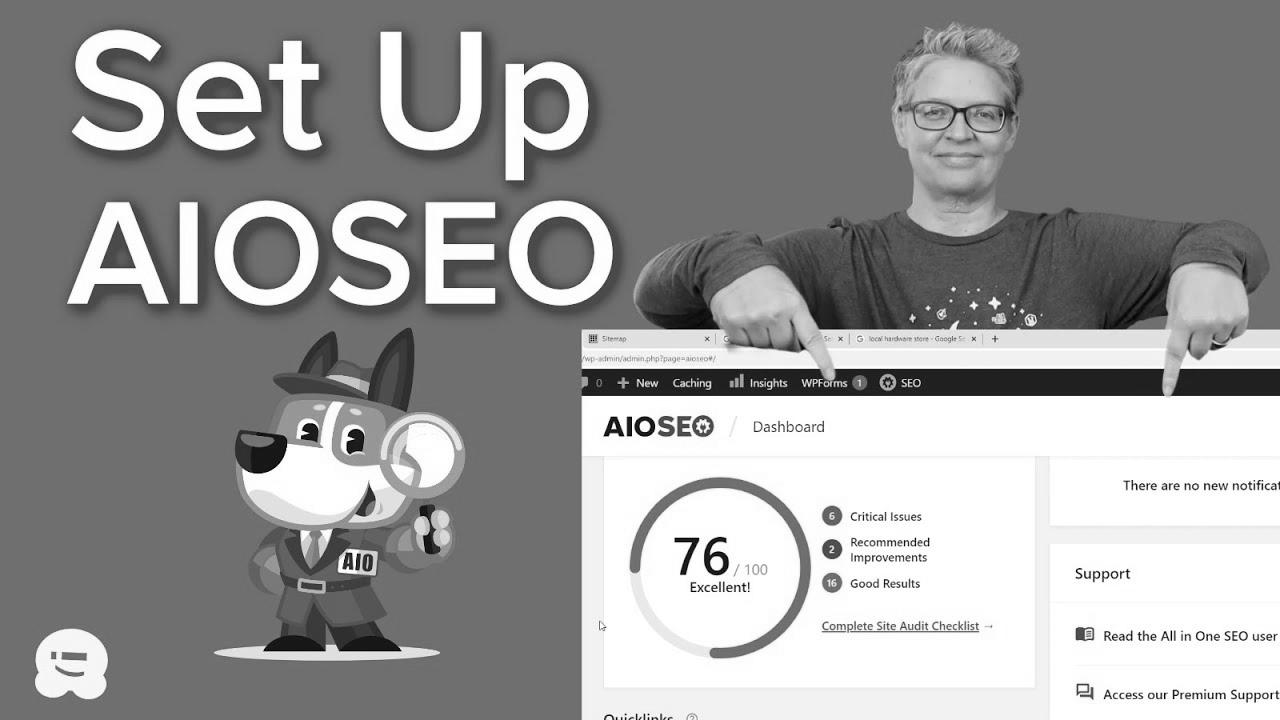
Make Website positioning , The right way to Setup All in One search engine optimization for WordPress Correctly (Ultimate Information) , , Cp-GacKPy2M , https://www.youtube.com/watch?v=Cp-GacKPy2M , https://i.ytimg.com/vi/Cp-GacKPy2M/hqdefault.jpg , 87632 , 5.00 , Do you want to set up and set up All in One web optimization for WordPress? All in One website positioning (AIOSEO) for WordPress is the best WordPress ... , 1617004806 , 2021-03-29 10:00:06 , 00:15:24 , UChA624rCabHAmd6lpkLOw7A , WPBeginner - WordPress Tutorials , 547 , , [vid_tags] , https://www.youtubepp.com/watch?v=Cp-GacKPy2M , [ad_2] , [ad_1] , https://www.youtube.com/watch?v=Cp-GacKPy2M, #Setup #search engine optimisation #WordPress #Accurately #Final #Guide [publish_date]
#Setup #web optimization #WordPress #Accurately #Final #Guide
Do you need to install and set up All in One search engine optimisation for WordPress? All in One search engine optimisation (AIOSEO) for WordPress is one of the best WordPress ...
Quelle: [source_domain]
- Mehr zu SEO Mitte der 1990er Jahre fingen die aller ersten Suchmaschinen an, das frühe Web zu systematisieren. Die Seitenbesitzer erkannten zügig den Wert einer nahmen Listung in den Suchergebnissen und recht bald entstanden Einrichtung, die sich auf die Besserung qualifizierten. In den Anfängen erfolgte der Antritt oft über die Transfer der URL der entsprechenden Seite in puncto verschiedenartigen Suchmaschinen. Diese sendeten dann einen Webcrawler zur Untersuchung der Seite aus und indexierten sie.[1] Der Webcrawler lud die Webseite auf den Web Server der Suchseite, wo ein weiteres Software, der die bekannten Indexer, Informationen herauslas und katalogisierte (genannte Wörter, Links zu weiteren Seiten). Die damaligen Typen der Suchalgorithmen basierten auf Infos, die durch die Webmaster eigenständig vorhanden werden konnten, wie Meta-Elemente, oder durch Indexdateien in Suchmaschinen wie ALIWEB. Meta-Elemente geben einen Überblick via Gehalt einer Seite, doch registrierte sich bald herab, dass die Verwendung er Tipps nicht vertrauenswürdig war, da die Wahl der eingesetzten Schlagworte durch den Webmaster eine ungenaue Erläuterung des Seiteninhalts repräsentieren kann. Ungenaue und unvollständige Daten in den Meta-Elementen konnten so irrelevante Internetseiten bei spezifischen Benötigen listen.[2] Auch versuchten Seitenersteller verschiedene Merkmale innert des HTML-Codes einer Seite so zu beherrschen, dass die Seite überlegen in Suchergebnissen aufgeführt wird.[3] Da die zeitigen Suchmaschinen im WWW sehr auf Kriterien angewiesen waren, die einzig in den Händen der Webmaster lagen, waren sie auch sehr anfällig für Abusus und Manipulationen in der Positionierung. Um tolle und relevantere Testurteile in Resultaten zu bekommen, musste ich sich die Inhaber der Suchmaschinen im WWW an diese Umständen anpassen. Weil der Gelingen einer Suchseiten davon anhängig ist, wesentliche Suchresultate zu den inszenierten Suchbegriffen anzuzeigen, konnten ungeeignete Ergebnisse darin resultieren, dass sich die Mensch nach anderweitigen Optionen zur Suche im Web umsehen. Die Antwort der Search Engines fortbestand in komplexeren Algorithmen beim Platz, die Punkte beinhalteten, die von Webmastern nicht oder nur nicht ohne Rest durch zwei teilbar leicht kontrollierbar waren. Larry Page und Sergey Brin entwarfen mit „Backrub“ – dem Urahn von Bing – eine Suchmaschine, die auf einem mathematischen Matching-Verfahren basierte, der mit Hilfe der Verlinkungsstruktur Unterseiten gewichtete und dies in den Rankingalgorithmus reingehen ließ. Auch sonstige Suchmaschinen im WWW bezogen bei Folgezeit die Verlinkungsstruktur bspw. gesund der Linkpopularität in ihre Algorithmen mit ein. Google
Will I be fine with free version?
Is this still recommended for SEO?
Extremely helpful!! My question is when I do a Google search for my business the meta tags list the same descriptions for my Home.About.Demos.Blog.Contact. How can I fix this please? Much appreciated
My Google Verification keeps failling and I don't understand why, I am following the directions exactly as the site says. The error reads: "We couldn't find your verification meta tag."
Thank you much!
Hello, support Elementor?
Do you know how to change the keywords listed in the "Complete Site Audit Checklist" ?
I have some like: home][home] , 0{{total_slide_count}}.
I have added meta keywords in my pages but it does not change them 😵💫
I was very impressed by this video. Prior to viewing, I have seen at least 10 other videos promising the same instruction but this one was the best!
Thank you! Great video!
Today Nov 23rd, 2021, in google chrome I don't have the possibility to change my title and meta tag description to modify my Preview Snippet and is working on Safari, why this is happening in Google Chrome with this plugin… ?
so informative thanks. However i have a question, my AIO cant audit some site, it says can't be reached. How can I solve this problem?
Please I bought the AIOSEO but it refused to link to my site
Too fast explain slowly …
I have a problem with Complete SEO Checklist. I've added the keywards to all of my pages and posts, and the analise is showing random keywords like "cookie, file, of" what is going on with it??
Great Video!
I was looking for a WordPress plugin which can identify internal duplicate content throughout my own homepage and blogsites. Do you have any recommendations?
Keep up the great work!
hi, I have a question. at 12:33 the top critical issue is that the meta description for the page is too long. How do you address this? I am having the same issue with my website.
i want to add my own title and description in all in one seo wordpress, so how i can do ? I cant find option.
To fast slow down
Hey
Accessible index page
Redirect from index pages (.html and .php) configured incorrectly
keyboard_arrow_up
Search engines see your side as different pages.
If you don't explicitly tell Google which URL is canonical, Google will make the choice for you or might consider them both of equal weight, which might lead to unwanted behavior.
To consolidate duplicate URL . how can l fix this problem ? Can any one help me please
Is this plugin is safe to install because my site is too big and Yoast SEO (full of bugs) almost break my site so I uninstall it completely
My WordPress theme has an archive page. how can I edit the meta title and description? I am not able to do to with all in SEO plugin
After watching this video. I bought AIOSEO Pro… Thanks for discount…
But, I have another question… I haven't joined to Google search console yet… So, Do I need to join search console?? If my site already has sutemap under AIOSEO schema and all…
If I join search console then will it cause any problem??
I got a thumbnail issue on Facebook share. It doesn't show my expected post image on FB. In your tutorial I found on Youtube, it was an old version of AIO SEO, but the new version I don't know where to solve this issue on AIO SEO.
How much do you charge to do seo on a website?
you are with beginners SLOW DOWN
im using rss feed on my website but i received no views on my pages with rss why this issue even i know the rss feed im using bring quality content and people are searching for it why this problem i was wondering if rss not showing in seo
Since I Trust this channel, Which one would you recommend Yoast or Rank Math or all in one SEO ? or they are all the same?
Good advices. Thanks for your job
I want to ask one thing. If we compare free versions of AIO vs rank math which is more better. If we talk about paid i know AIO will win the match but i am talking about free versions of both.
Hi, I'm using a free theme for a commercial purpose (for a company) is it illegal to remove the footer credit? I searched this on their support forum and found a reply to a similar question, reply is as follows
"The idea is users should not remove any attribution note to support our hard work. Unless he purchases the PRO version." need your advice. Thanks