study Bowler’s action 🎾😂
Warning: Undefined variable $post_id in /home/webpages/lima-city/booktips/wordpress_de-2022-03-17-33f52d/wp-content/themes/fast-press/single.php on line 26
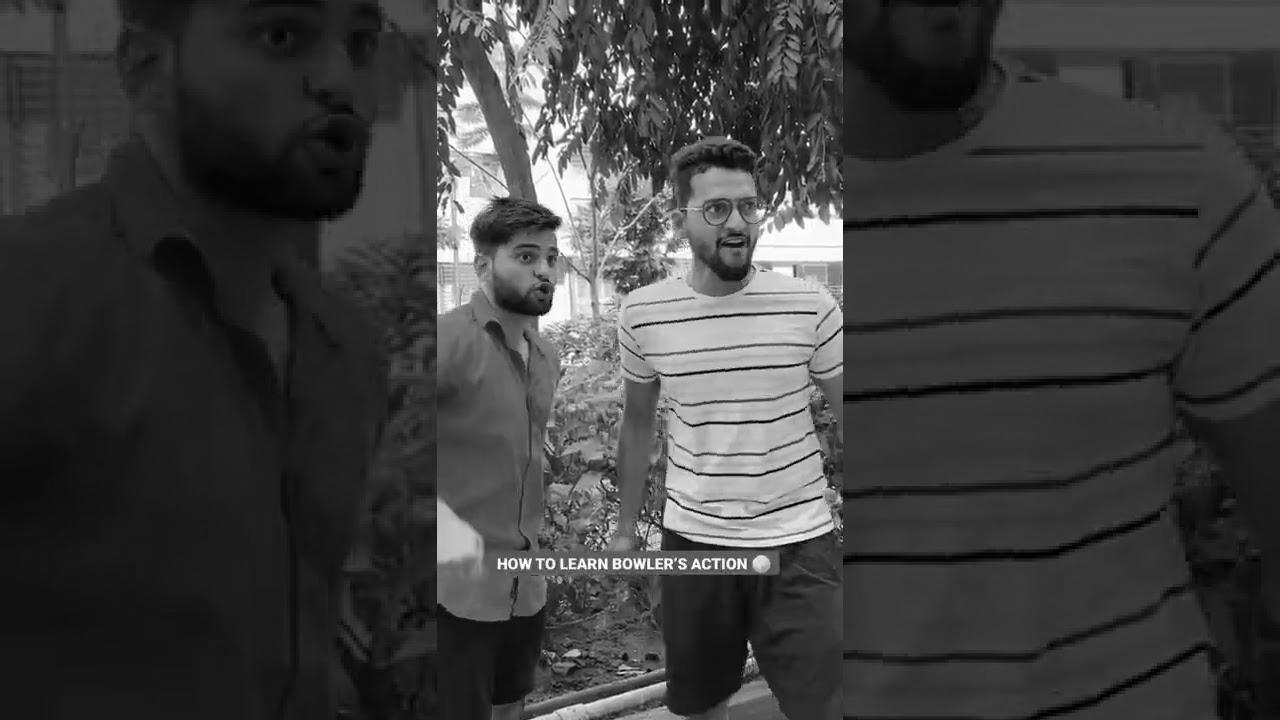
Study , Learn how to study Bowler’s action 🎾😂 , , 4jK6HsjKePY , https://www.youtube.com/watch?v=4jK6HsjKePY , https://i.ytimg.com/vi/4jK6HsjKePY/hqdefault.jpg , 18615511 , 5.00 , , 1649053801 , 2022-04-04 08:30:01 , 00:00:48 , UCdHE6yw63QqfxoH6y-D5sFg , Funcho Shorts , 1536278 , , [vid_tags] , https://www.youtubepp.com/watch?v=4jK6HsjKePY , [ad_2] , [ad_1] , https://www.youtube.com/watch?v=4jK6HsjKePY, #study #Bowlers #action [publish_date]
#learn #Bowlers #motion
[matched_content]
Quelle: [source_domain]
- Mehr zu learn Encyclopaedism is the process of getting new sympathy, noesis, behaviors, profession, values, attitudes, and preferences.[1] The inability to learn is demoniacal by humanity, animals, and some machines; there is also bear witness for some kinda learning in convinced plants.[2] Some encyclopaedism is immediate, spontaneous by a respective event (e.g. being injured by a hot stove), but much skill and noesis put in from perennial experiences.[3] The changes iatrogenic by education often last a time period, and it is hard to differentiate well-educated substance that seems to be "lost" from that which cannot be retrieved.[4] Human encyclopedism begins to at birth (it might even start before[5] in terms of an embryo's need for both interaction with, and immunity inside its surroundings inside the womb.[6]) and continues until death as a result of current interactions betwixt friends and their surroundings. The existence and processes active in encyclopaedism are unstudied in many established william Claude Dukenfield (including educational scientific discipline, psychophysiology, psychonomics, psychological feature sciences, and pedagogy), besides as emerging w. C. Fields of cognition (e.g. with a distributed interest in the topic of encyclopaedism from device events such as incidents/accidents,[7] or in collaborative eruditeness wellness systems[8]). Investigate in such fields has led to the identification of different sorts of eruditeness. For illustration, eruditeness may occur as a consequence of dependency, or classical conditioning, operant conditioning or as a effect of more complex activities such as play, seen only in comparatively intelligent animals.[9][10] Encyclopaedism may occur unconsciously or without cognizant cognisance. Learning that an aversive event can't be avoided or at large may effect in a state known as knowing helplessness.[11] There is show for human behavioral learning prenatally, in which dependance has been discovered as early as 32 weeks into construction, indicating that the cardinal anxious organization is insufficiently matured and fit for encyclopaedism and remembering to occur very early on in development.[12] Play has been approached by single theorists as a form of education. Children research with the world, learn the rules, and learn to interact through and through play. Lev Vygotsky agrees that play is pivotal for children's growth, since they make meaning of their environs through and through performing instructive games. For Vygotsky, however, play is the first form of encyclopaedism nomenclature and human action, and the stage where a child begins to interpret rules and symbols.[13] This has led to a view that encyclopaedism in organisms is primarily kindred to semiosis,[14] and often connected with representational systems/activity.
Epic
😂😂😂😂😎🔥
1 is best v🤣🤣🥳🤣🤣🤣
😂😂😂
Bhau maraati.video banav
ishantkumar 💩
Superb
Harbajan singh ajad panchhi ki tarah 😂😂😂😂😂 and malinga was tooo good 😅😅😅😅😅
Creative lelvel 👌👌👌👌👌
kiyaaaa soch hai re teri waah bhai
Shaibi is like to aim on face rather than wicket😂😂😂❤️❤️
😂😂😂😂😂😂😂
Muralitharan and Shoaib Akhtar was hiralious😂😂
Gandfar
Op bhi
🤣🤣🤣😂😂😂😂😂🤣
Gajab bro 😂
Oh my God that one word
"लस्सी मलिंगा "
😆🤭🤩😍😅
Samajh tu aazad panchhi h ,
Tu kawwa h
🤭🤭😆😆🤩😍😍
😂😂
🤣🤣🤣
Marathi ji po
Last Wala mast tha re BABA BABURAO yaad aaya🤐😬😬😁😆😆😂🤣
🤣🤣🤣
Your are the greate comedy videos… I am every times watching videos…
1 one is next level
Ek number bhai
😂
Abe bhumrah ka kidhar hai
Bhai lekin 100% accha aya hai
🤣🤣🤣