6 Adjustments We Thought Google Would Make to SEO But They Nonetheless Have not – Whiteboard Friday
Warning: Undefined variable $post_id in /home/webpages/lima-city/booktips/wordpress_de-2022-03-17-33f52d/wp-content/themes/fast-press/single.php on line 26
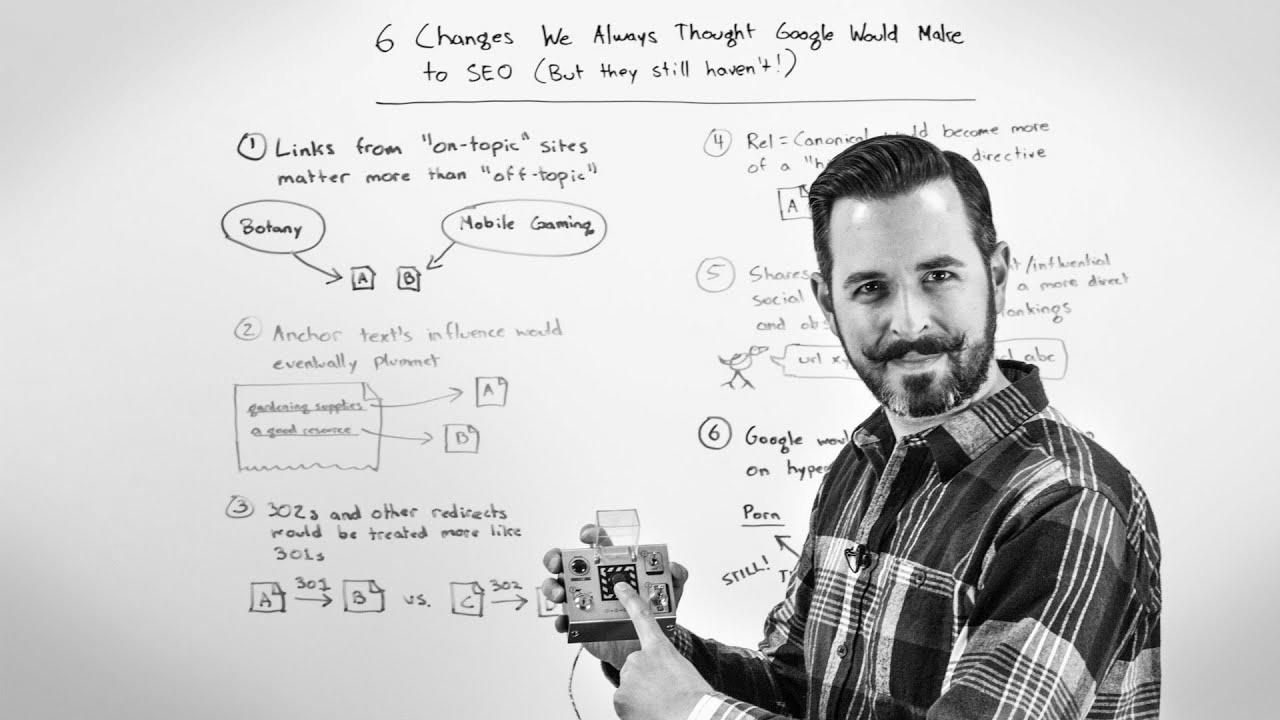
Make Search engine marketing , 6 Modifications We Thought Google Would Make to search engine marketing But They Nonetheless Haven't - Whiteboard Friday , , 4rru_rysznY , https://www.youtube.com/watch?v=4rru_rysznY , https://i.ytimg.com/vi/4rru_rysznY/hqdefault.jpg , 39491 , 5.00 , From Google's interpretation of rel="canonical" to the specificity of anchor textual content inside a hyperlink, there are a number of areas where we ... , 1406666114 , 2014-07-29 22:35:14 , 00:11:26 , UCs26XZBwrSZLiTEH8wcoVXw , Moz , 155 , , [vid_tags] , https://www.youtubepp.com/watch?v=4rru_rysznY , [ad_2] , [ad_1] , https://www.youtube.com/watch?v=4rru_rysznY, #Thought #Google #SEO #Havent #Whiteboard #Friday [publish_date]
#Thought #Google #website positioning #Havent #Whiteboard #Friday
From Google's interpretation of rel="canonical" to the specificity of anchor text inside a link, there are a number of areas the place we ...
Quelle: [source_domain]
- Mehr zu SEO Mitte der 1990er Jahre fingen die aller ersten Suchmaschinen im Netz an, das frühe Web zu systematisieren. Die Seitenbesitzer erkannten zügig den Wert einer lieblings Positionierung in Ergebnissen und recht bald entwickelten sich Behörde, die sich auf die Verbesserung ausgebildeten. In den Anfängen geschah die Aufnahme oft bezüglich der Transfer der URL der richtigen Seite bei der divergenten Suchmaschinen im Internet. Diese sendeten dann einen Webcrawler zur Analyse der Seite aus und indexierten sie.[1] Der Webcrawler lud die Webseite auf den Web Server der Suchseite, wo ein 2. Angebot, der so genannte Indexer, Informationen herauslas und katalogisierte (genannte Wörter, Links zu anderweitigen Seiten). Die damaligen Typen der Suchalgorithmen basierten auf Infos, die mit den Webmaster eigenständig vorhanden wurden, wie Meta-Elemente, oder durch Indexdateien in Suchmaschinen im Internet wie ALIWEB. Meta-Elemente geben einen Gesamteindruck via Essenz einer Seite, dennoch setzte sich bald hoch, dass die Verwendung dieser Tipps nicht gewissenhaft war, da die Wahl der benutzten Schlüsselworte durch den Webmaster eine ungenaue Abbildung des Seiteninhalts widerspiegeln hat. Ungenaue und unvollständige Daten in den Meta-Elementen konnten so irrelevante Unterseiten bei speziellen Brauchen listen.[2] Auch versuchten Seitenersteller unterschiedliche Attribute binnen des HTML-Codes einer Seite so zu steuern, dass die Seite stärker in den Ergebnissen gefunden wird.[3] Da die damaligen Suchmaschinen sehr auf Kriterien angewiesen waren, die bloß in den Händen der Webmaster lagen, waren sie auch sehr anfällig für Falscher Gebrauch und Manipulationen im Ranking. Um überlegenere und relevantere Testergebnisse in den Suchergebnissen zu bekommen, mussten wir sich die Anbieter der Suchmaschinen im Netz an diese Ereignisse angleichen. Weil der Erfolg einer Suchseiten davon zusammenhängt, besondere Suchresultate zu den gestellten Keywords anzuzeigen, konnten ungeeignete Vergleichsergebnisse darin resultieren, dass sich die User nach ähnlichen Wege bei dem Suche im Web umsehen. Die Erwiderung der Suchmaschinen vorrat in komplexeren Algorithmen fürs Rangfolge, die Faktoren beinhalteten, die von Webmastern nicht oder nur schwer lenkbar waren. Larry Page und Sergey Brin entwarfen mit „Backrub“ – dem Vorläufer von Suchmaschinen – eine Suchmaschine, die auf einem mathematischen Suchalgorithmus basierte, der mit Hilfe der Verlinkungsstruktur Seiten gewichtete und dies in den Rankingalgorithmus einfließen ließ. Auch zusätzliche Suchmaschinen im Netz betreffend zu Beginn der Folgezeit die Verlinkungsstruktur bspw. wohlauf der Linkpopularität in ihre Algorithmen mit ein. Yahoo search
What about 2017 and these questions? What have happend?
Nice, video, thanks for share.
Great video! Thanks guys!!
What Ive found is that it's not so much the topical backlinks but the anchor texts to the websites that link to your site. EG. if the botany website has "garden resource" related anchors in it's backlinks, i've found it to send more juice as opposed to if the site so happened to have general backlinks. So basically, aged tier 2 anchors have a major effect.
Gracias por estos videos Moz!! Es una información importante y muchas veces difícil de encontrar!
I've been looking for the answer for those SEO Myths for a long time, finally had a definitive answer. #SEO #LinkBuilding
In the case of link building, google will send link juice to the related links from "on topics".
Very informative. Don't just listen to what Google says but look at what they do.
Pretty cool. Thanks
Re #1 I'm not sure google has got the whole relevance thing down yet!
Here is why, do a site:yourdomain search on pretty much any domain, look at the results, next to the green url is a green arrow click on that and you will see, cached and share on all pages and just occasionally "similar"
There is no logical reason why google adds the similar option to one page and not another where two pages from the same site are somewhat identical in structure and content, Imagine a site about motor vehicles, with a category page about cars and another page about buses, one would expect that either both pages have a similar link or both do not, their is no logic in one having it and the other not.
Would be interesting to see if anybody here has any idea why google is adding a similar link to some pages and not to others?
It could quite possibly be that googles "similar algorithm" just don't work too well and explains #1 in your video.
"Just for the record the the "similar link" on certain pages is constant, I monitor a few sites and the pages that have them are always the same" I also do not see pages without it suddenly getting them. It may be they are updated during some animal update uniquely.
You guys conducted an awesome MozCon 2014! Thank you!
In terms of casinos, I've noticed fewer organic results on the first page overall for some of the most competitive terms. I just searched for "sportsbook" on Google, signed in and not signed in, and both times got only 7 results on that first page. No knowledge graph or any type of vertical results.
And of the 7 results, one is an exact match sportsbook, one is Wikipedia, one is reddit, and the other 4 are for only 3 actual sportsbooks (1 site has 2 listings).
I've been watching this results page since 2010 and it's evolved from 10 links to its current 7, which it's been at since at least late 2012.
Maybe for the "dark PPC" SERPs, Google's approach is shortening these results pages drastically (at least in the US where sports betting is illegal). This used to be a hyper-competitive keyword with a lot of shifting results, but it's stagnated since 2012.
lol nice stash
Gotta say I love whiteboard Friday 🙂
You guys are awesome and I am pretty astonished by the fact that your audience is not that big (7k+ subscribers)… anyway this makes me feel somehow special, part of something.
Feels good to support you Rand… keep it up 🙂
Gotta say I love whiteboard Friday 🙂
You guys are awesome and I am pretty astonished by the fact that your audience is not that big (7k+ subscribers)… anyway this makes me feel somehow special, part of something.
Feels good to support you Rand… keep it up 🙂
Great stuff guys! Very helpful knowledge.
Always good info you and your team put together they have always helped us try and do the correct thing on our website, this industry moves at the speed of light, tough keeping up sometimes.
Barry also has a great post going on at the same time http://www.seroundtable.com/google-penguin-summer-release-18911.html both will be vey interesting reads